 Arctic Story House
Búkolla
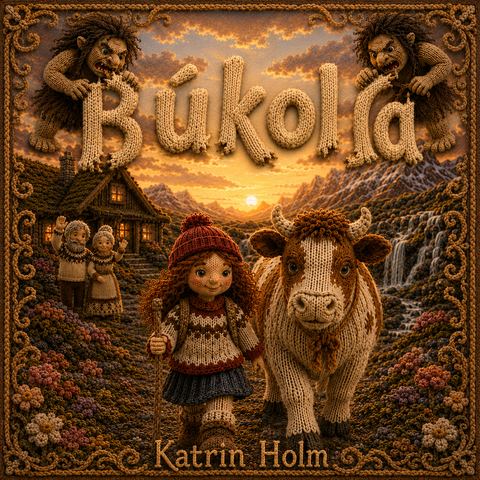
Once, long ago, there lived an old man and an old woman in their little turf cottage beneath a mountain. They were poor — so poor that they owned little more than smoke in the chimney, turf over their heads, and a single cow in the byre.
The cow's name was Búkolla. She was worth more to them than silver and gold, for she gave them milk through the long dark winter, when snow lay heavy over the home field and the wind beat the walls like an unseen hand. The old couple also had a daughter, a young lass, quiet and good-hearted, though not always as careful as her parents might have wished.
One morning the old woman went out to the byre with the milking pail in her hand. But when she opened the door, the stall stood empty. Búkolla was gone.
The old woman called for the old man, and the old man called for their daughter. They searched around the farmhouse, down by the stream, along the fence, and out across the home field. But the creature was nowhere to be seen. Only a faint trail could be made out in the dew-wet grass, as though something had set off toward the mountain while the household slept.
"This is a bad business," said the old man. "If Búkolla isn't found, we'll have little left to live on." The old woman looked at her daughter. Her face was pale, but her voice was steady. "Go, my girl," she said. "Go and find her. And when you've walked far from the farm, call out loud: Low now, my Búkolla, if you are anywhere alive."
The girl nodded, took up her walking staff, and set off. She walked first across the home field, then over the moors, where frost still clung in the hollows though the sun had already climbed into the sky. She passed grey stones, black ridges of lava, and streams murmuring beneath the ice. The mountains rose ahead of her, dark and silent, as if they had been awake all night and knew more than they cared to say.
When she had gone some way from the farm, she stopped, cupped her hands to her mouth, and called: "Low now, my Búkolla, if you are anywhere alive!" She listened. Nothing answered but the wind moving through the grass. She walked on. Again she called:
"Low now, my Búkolla, if you are anywhere alive!" This time she thought she heard something. Very faint. Very far away. One sad, low moo, as though it came from inside a stone. The girl ran toward the sound. She climbed a steep slope, scrambled between boulders, and came at last to a dark cave-mouth beneath a black crag. Inside, the air was cold and heavy. It smelled of earth, smoke, and old bones.
The girl stepped carefully inside. "Búkolla?" she whispered. The cow lowed again. Deep inside the cave she saw her. Búkolla stood tied to a great stone, and beside her stood a little calf. She flicked her ears when she saw the girl and looked at her with eyes deeper than the night outside.
"My Búkolla," said the girl, and ran to her. She untied her as quickly as she could. But as the rope came loose, a heavy snore sounded from deeper in the cave. Then another. And then the girl saw that two troll-women lay sleeping there, one huge, one smaller, their heads on stones and their feet stretching off into the darkness.
Búkolla nudged her gently with her head, as if to say: hurry. The girl took hold of the rope and led her out of the cave, the calf trotting behind. They had barely come down from the crag when the great troll-woman woke. "Who has taken my cow?" she roared, so loudly the mountain shook with it.
The smaller troll-woman rose too, and together they burst out of the cave. They saw the girl and Búkolla fleeing down the slope. "There she goes!" bellowed the big one. "Catch her!" The girl glanced over her shoulder and saw the troll-women coming after her. Their strides were so long that she knew they would catch her in no time at all.
"What shall we do now, my Búkolla?" she called. Búkolla turned her head a little and said, low but clear: "Pull a hair from my tail and lay it upon the ground." The girl did as she said. She pulled one hair from her tail and laid it on the earth.
Then Búkolla spoke over the hair: "Become such a great river that none may cross it but the bird in flight." In that instant the hair became a wide, roaring river. The water rose between them and the troll-women, dark and deep, white waves battering its banks.
The great troll-woman reached the river and snarled. "That won't save you, girl!" She turned to the smaller one. "Run home and fetch my father's great ox!" The smaller troll-woman ran back into the mountain and soon returned leading a monstrous ox, blacker than night and bigger than any beast the girl had ever seen. The ox went down to the river and drank. It drank and drank, until all the water was gone and the riverbed lay bare again.
The troll-women set off after them once more. The girl heard their footsteps closing in. "What shall we do now, my Búkolla?" she called. "Pull another hair from my tail and lay it on the ground," said Búkolla. The girl pulled a second hair and laid it down.
Búkolla spoke: "Become such a great blaze that none may cross it but the bird in flight." Fire sprang up at once. It rose high into the air, red and gold, lighting the hillsides as if an evening sun had fallen to earth. The heat struck the troll-women so hard that they had to stop.
But the great troll-woman laughed a deep, dark laugh. "That won't save you either." She called for the ox again. It came, heavy and soaked from the river, and let loose all the water it had drunk over the flames. The fire hissed, smoke rose to the sky, and the blaze went out.
Now the troll-women were closer than ever before. The girl felt her heart pounding in her chest. "My Búkolla," she said, "now they will catch us." "Pull one more hair from my tail," said Búkolla, "and lay it on the ground." The girl pulled the third hair. Her hands were shaking, but she laid it down.
Búkolla spoke over it: "Become such a high mountain that none may cross it but the bird in flight." A mountain rose up out of the earth. It grew and grew, taller than the farmhouse, taller than a church tower, taller than the clouds. The girl saw only grey rock stretching up into the sky, and the troll-women vanished on the far side of the mountain.
She and Búkolla went on toward home. But the great troll-woman did not give up. "That won't save you, girl!" her voice echoed over the mountain. She sent the little troll-woman home for her father's great auger. When she brought it, the big one began to bore a hole through the mountain. The rock shook. Stones fell. Dust and earth swirled into the air.
At last the troll-woman saw daylight on the other side. She grew so eager that she did not wait for the hole to widen enough. She forced herself into it with all her great weight, but the hole was too narrow. There she stuck fast.
She shook the mountain and roared so loudly that the ravens flew up from the cliffs. But the more she struggled, the more firmly she was wedged. And before long she turned to stone within the mountain. Some say she stands there still. The girl walked home now with Búkolla and the calf. As she neared the farm, the old woman came out onto the doorstep. The old man followed behind her. They looked first at the girl, then at the cow, then at the little calf stumbling along behind.
The old woman wept for joy. The old man laid his hand on his daughter's shoulder and said nothing, for sometimes the greatest thanks are too heavy for words. Búkolla walked into the byre by herself, as though she had only been away a short while. She turned her head toward the girl and lowed softly.
It was not an ordinary moo. It was like an old promise. From that day on, the girl never again forgot to close the byre door. And when the wind lay over the home field in the evenings, soft as wool over a dark land, the people sometimes felt that the mountain answered, far away.
Not with a human voice. Not with a troll's roar. But with a low, deep moo. And then the folk of that district would say: "That is Búkolla. She still remembers the way home."
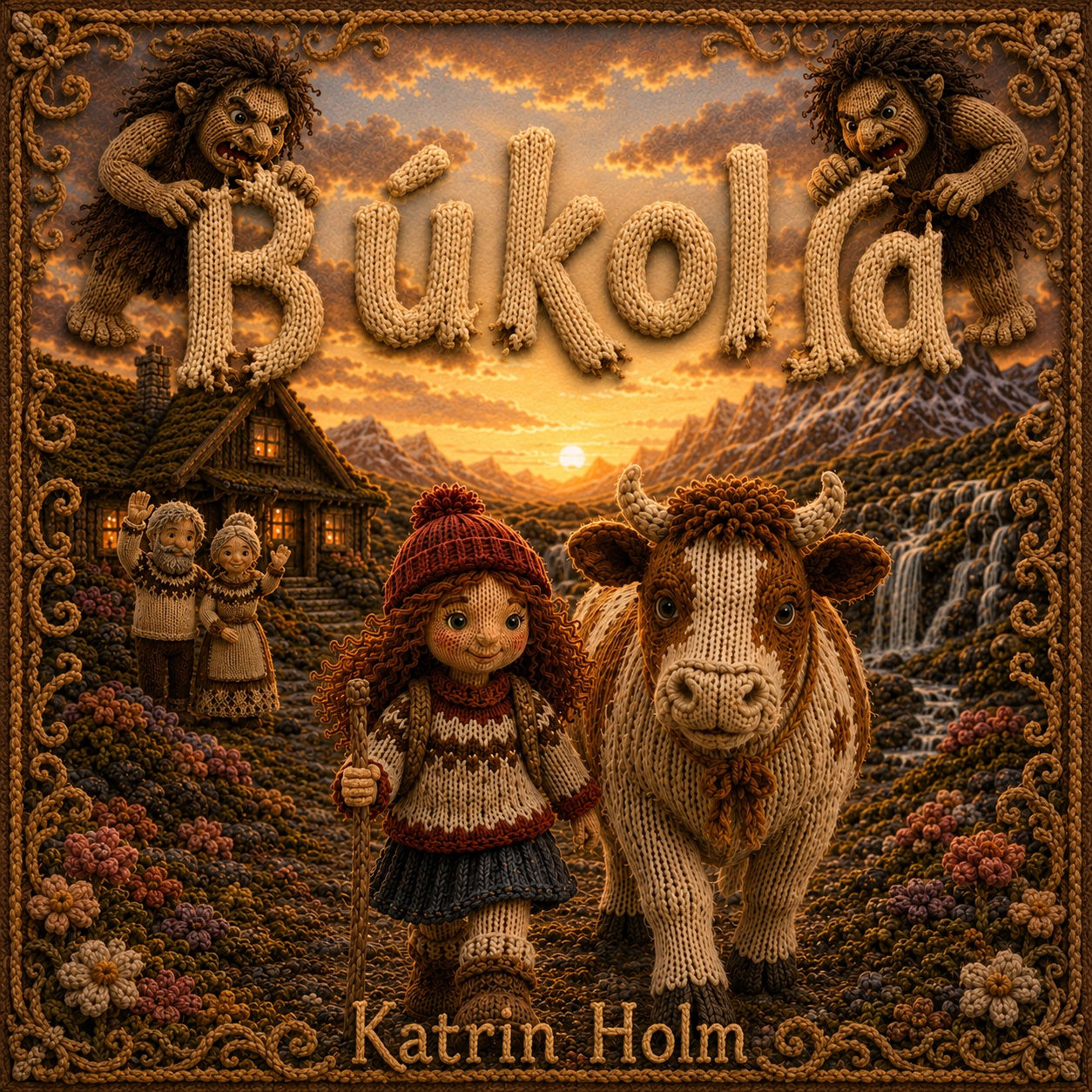
Búkolla is also a fully illustrated picture book — free to read.
Open the illustrated book